How additive manufacturing is reshaping design, production and customisation
3D printing, also known as additive manufacturing, is increasingly transforming both the aviation and superyacht industries. By enabling faster prototyping, lighter components, and highly customised designs, the technology is changing how aircraft and yachts are designed, produced, and maintained.
What 3D Printing Brings to Both Sectors
One of the most immediate advantages is faster prototyping. Designers and engineers can rapidly create scale models, mock-ups, and fit-out components, cutting prototype lead times from weeks to just days. This allows for faster design iterations and quicker decision-making during development.
Another major benefit is the production of lightweight, high-strength parts. Aerospace-grade polymers and titanium components can significantly reduce weight. In aviation, this leads directly to fuel savings, while in yachts and tenders it contributes to lower operating costs and improved performance.
3D printing also enables complex geometries that were previously impossible to manufacture. Organic structures, lattice forms, and internal channels can now be integrated directly into components, improving airflow, hydrodynamics, and cooling performance.
Perhaps most importantly for luxury sectors, additive manufacturing allows for extensive customisation and one-off production. This is particularly valuable for superyacht interiors and owner-specific aviation cabin elements. It also makes it possible to rapidly reproduce discontinued or difficult-to-source parts.
Aviation: Already Leading in Additive Manufacturing
The aviation industry is roughly a decade ahead of yachting in adopting additive manufacturing technologies.
3D printing is already widely used in structural and engine components. For example, GE Aviation’s LEAP engine includes a 3D-printed fuel nozzle that is 25% lighter and five times stronger than the traditionally manufactured version. Airbus aircraft also incorporate the technology extensively, with more than 1,000 printed parts flying in A350 aircraft.
Manufacturers are also using large-scale 3D printing for tooling and production fixtures, reducing factory costs while improving accuracy.
For aviation clients, this opens up several opportunities:
- Rapid prototyping of cabin interior concepts
- Bespoke cabin components tailored to individual owners
- Faster certification cycles through the use of digital twins linked to printed parts
Superyachts: A Rapidly Growing Opportunity
While adoption is newer, 3D printing is gaining momentum across the superyacht industry, particularly in exterior components, interiors, and boatyard operations.
Exterior and Structural Applications
Additive manufacturing is being used for components such as:
- Winch parts, fairings, and ducting
- Metal-printed propeller blades using technologies like wire arc additive manufacturing (WAAM)
- Large-scale hull and deck moulds
Interiors: The Fastest-Growing Area
Because yacht interiors are highly bespoke, 3D printing is a natural fit. Designers can create:
- Organic furniture and sculptural elements
- Custom light fixtures
- Complex cabinetry and ventilation grilles
- Replacement components during refits
- Custom art installations
Large-Format Printing for Tenders and Components
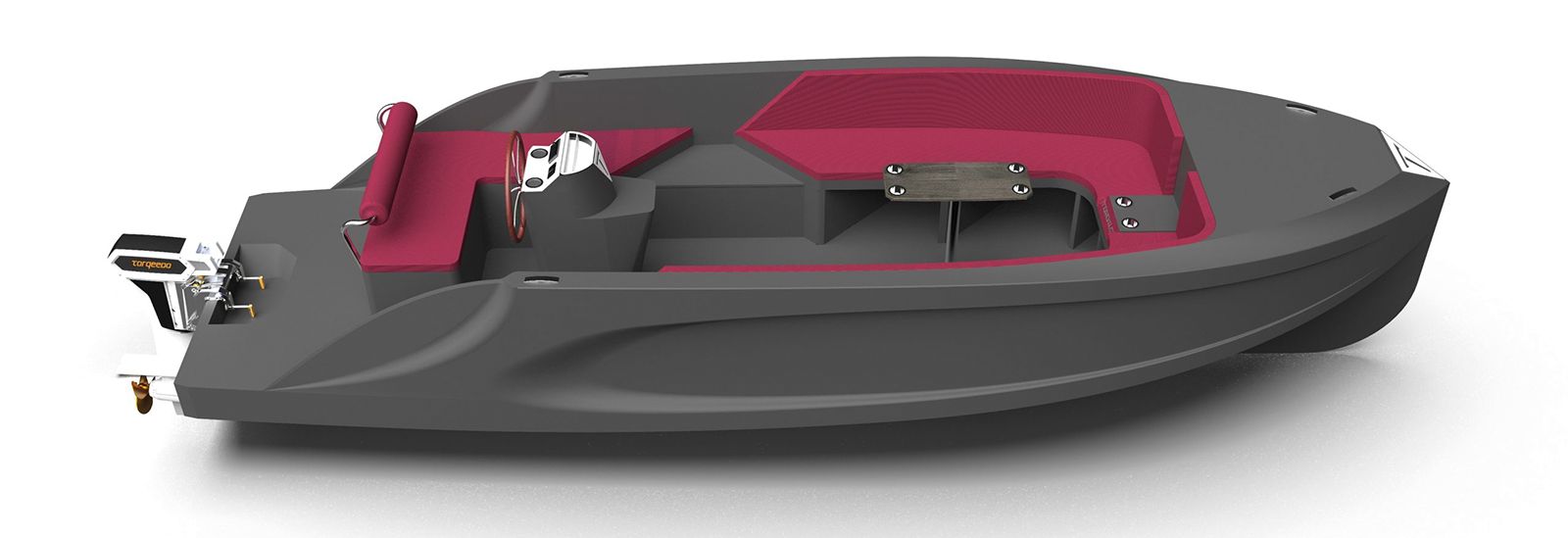
Large-scale printers are also enabling new possibilities for yacht tenders and subcomponents, including:
- Polymer-printed tender hull sections
- Custom fendering systems
- Printed console housings and ergonomic seating
Boatyard Applications
In boatyards, 3D printing can dramatically speed up operations by allowing:
- Rapid production of tools, jigs, and templates
- On-site fabrication of spare parts — particularly valuable for expedition yachts and vessels operating in remote locations
- Business Value for Designers, Builders, and Owners
For Owners
- Highly personalised interiors and unique features
- Faster build and repair times
- Lighter, more efficient yachts and aircraft
For Builders
- Reduced material waste
- Greater integration with digital design pipelines
For Designers
- Freedom to create previously impossible shapes
- Ability to produce prototypes in-house or through specialist partners
- Access to more sustainable material options
For high-end clients, additive manufacturing is also a powerful signal of innovation and advanced engineering.
What the Future Looks Like
Looking ahead, the use of 3D printing in both industries is expected to expand significantly.
In aviation, more engine and structural components are becoming certifiable, while fully printed cabin zones for private jets and integrated wiring channels within structural elements are already being explored.
In the superyacht sector, the future could include entire deckhouses printed as single organic structures, printed carbon-fibre tenders, and full interior shells manufactured for refits.
As additive manufacturing continues to evolve, it is set to play a central role in redefining how high-performance aircraft and luxury yachts are designed and built.