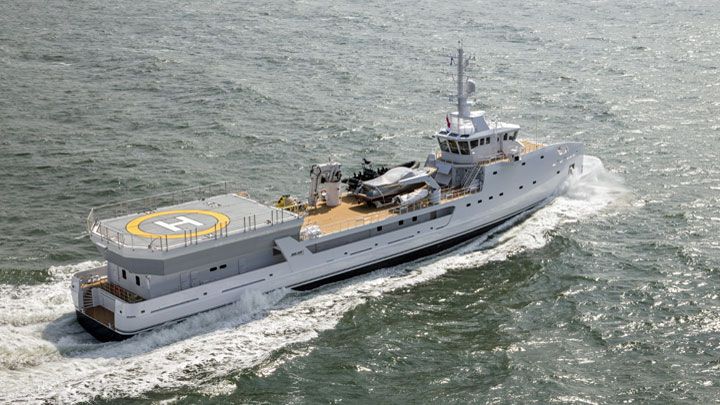
Often referred to as shadow yachts or expedition support ships—are purpose-built or converted platforms designed to operate alongside a primary superyacht, significantly expanding its operational, experiential, and logistical capabilities. They have become a defining feature of the modern explorer and ultra-large yacht ecosystem, particularly in the 70m+ segment.
Below is a structured overview, framed from an owner, designer, and operational perspective.
Purpose-Built Support Yachts
Designed from keel-up for yachting support
Hybrid layouts combining commercial robustness with yacht-standard accommodation
Key Functions and Capabilities
- Aviation Support
- Certified helidecks and hangars
- Aviation fuel storage and maintenance workshops
- Enables the main yacht to operate without intrusive aviation infrastructure
- Toys, Tenders, and Vehicles
- Large tenders (12–20m+)
- Sailing yachts, race boats, or chase boats
- Submarines, ROVs, AUVs
- Amphibious vehicles, expedition trucks, snowmobiles, jet skis
- Logistics and Autonomy
- Additional fuel, freshwater, and dry stores
- Spare parts and consumables
- Workshops (mechanical, electrical, composite)
This dramatically increases time between port calls—critical for remote cruising.
Crew and Operational Benefits
Dedicated crew accommodation for pilots, technicians, dive teams, and scientists
Reduces crew density and operational clutter on the main yacht
Enables safe segregation of “hotel” and “industrial” operations
From an owner experience standpoint, this separation is one of the most compelling arguments for a support vessel.
Design and Interior Considerations
Although not designed as luxury yachts per se, modern support vessels increasingly feature:
- Owner or guest cabins for expedition use
- Comfortable lounges, gyms, and briefing rooms
- Highly durable, commercial-grade interiors with selective luxury detailing
For design studios such as Chrysalis Yacht Design, support vessels present a particularly interesting challenge: creating interiors that are purposeful, robust, and calm—without drifting into unnecessary opulence.
Charter and Commercial Use
Support vessels are increasingly chartered independently or as part of a dual-yacht package. Typical charter roles include:
- Dive and exploration platforms
- Film and research support
- Event logistics (regattas, race support)
- High-end adventure charter programmes
From a commercial perspective, a well-specified support vessel can materially improve fleet utilisation and ROI.
Strategic Considerations for Owners
A support vessel makes sense when:
- The main yacht exceeds 70–80m and prioritises clean exterior lines and guest space
- The owner pursues aviation, diving, polar, or expedition cruising
- Global range and autonomy are core to the ownership vision
- Charter potential is a consideration
It is less about extravagance and more about operational intelligence.